



The set objective is to transform the distinctive cultural values of ethnic groups into resources for socioeconomic development, elevating both the material and spiritual lives of the people.
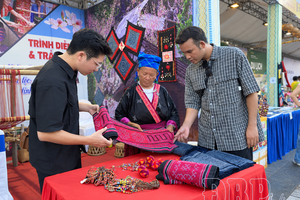
Điện Biên possesses a diverse and rich cultural life encompassing 19 ethnic groups, with each community holding distinct values handed down through generations. From housing architecture, costumes, and traditional crafts to festivals, scripts, and products created throughout daily labor and production, these values forge the distinctive cultural identity of the Northwestern region.
However, amidst the profound shifts of modern life, preserving and promoting traditional cultural values presents new imperatives. Culture must be preserved in real-life practice, passed down to younger generations, and progressively turned into resources serving socioeconomic development - particularly for community-based tourism and sustainable livelihood generation.
According to Nguyễn Thị Thanh Chuyên, Deputy Director of the Department of Culture, Sports, and Tourism, to execute Resolution No.80-NQ/TW, the sector first emphasizes public dissemination, assisting all levels, sectors, and citizens - particularly ethnic minorities - to thoroughly grasp the resolution’s content and spirit. The primary focus is raising awareness regarding traditional cultural values and communal responsibility in preservation. Localities are guided to clearly identify their distinctive cultural assets, thereby selecting representative values to preserve and promote in accordance with practical conditions. This is viewed as an important foundation for embedding culture more deeply into daily life while opening up avenues to harness cultural values linked with local tourism and economic growth.
.jpg)
Concurrently, the Department of Culture, Sports, and Tourism focuses on reviewing and studying policies and legal normative documents related to cultural development in ethnic minority areas, clarifying key targets and focal tasks to advise on practical execution. A major priority is constructing and perfecting the grassroots cultural institution network. These serve as venues for community gatherings, cultural performances, arts, and sports, while functioning as hubs for storing, transmitting, and promoting local cultural heritage.
Across the province, 1,250 mass art performance troupes maintain operations; 932 cultural houses and community gathering points are active; and 100% (45 out of 45) of communes and wards have cultural and sports facilities. The province currently has 7 stadiums, 144 soccer pitches, 4 athletics fields, 225 pickleball courts, 138 training halls (including 33 multi-purpose training halls), 34 swimming pools, 100 basketball courts, 466 volleyball courts, 838 badminton and shuttlecock courts, and over 300 other sports grounds.
A long-term solution identified by the culture sector is training and fostering grassroots cadres and local residents. For the 2026-2030 period with orientations toward 2035, training programs are being rolled out across multiple fields, including heritage value preservation and promotion, tourism development, grassroots communications, and community cultural guidance.
A prime illustration of this orientation is the model for reviving and expanding the traditional khẩu xén cake craft of the White Thái people in Mường Lay ward. Under the guidance of Hoa Ban Trắng Cooperative, a culinary heritage once made solely for holidays and Tết has been preserved, taught through centralized training, and elevated into a standardized OCOP product.
Lò Chúc Chi, Director of Hoa Ban Trắng Cooperative, shared that the khẩu xén craft was previously household-based and primarily intended for family consumption during Tết. Joining the cooperative enabled women to receive formal training on food hygiene and safety standards, packaging, and product marketing. Transforming khẩu xén into an OCOP product tied to experiential tourism allows visitors to Mường Lay to make cakes by hand and savor authentic local cuisine.
A notable feature in the department’s approach to implementing Resolution 80 is the shift in administrative mindset. Nguyễn Thị Thanh Chuyên added that the department is progressively modernizing its mindset in cultural state management, moving from a rigid regulatory approach to cultural governance. Alongside inspection, supervision, and regulation, the sector emphasizes providing concrete guidance for local authorities and residents to organize and promote cultural activities. This builds grassroots proactivity, contributing to the effective realization of Resolution 80’s goals and embedding cultural values as a practical part of community life.
Through the synchronized implementation of these solutions, the Department of Culture, Sports, and Tourism expects Resolution 80 to take deep root, generating noticeable shifts across ethnic minority cultural life. Culture will steadily become an endogenous resource, generating livelihoods, enriching spiritual welfare, and inspiring local pride and self-reliance. That foundation will enable Resolution 80 to translate into reality, making culture a pivotal driver for sustainable development in Điện Biên.
Diệp Chi
.jpg)
.jpg)
.jpg)
.jpg)
.jpg)
.jpg)
.jpg)


.jpg)
.jpg)
.jpg)
You have 500/500 characters left
Please enter 5 or more characters!!!